
Top 3 Embedded BI SaaS Use Cases for 2026
Key takeaways for embedded business intelligence (BI) in SaaS (TL;DR)
Embedded business intelligence (BI) isn't just about adding charts to your app; it's about making your product experience — and your users — more valuable and competitive.
- Users get more done: Embedded BI enables users to get insights instantly, so they spend less time searching for data and more time using your product.
- They become more successful: Giving users key analytics and insights directly in your app helps them reach their goals faster. and perform true self-service analytics.
- Your product becomes a must-have: Embedded BI provides new ways to monetize your data through premium tiers or data-as-a-service offerings, making your product more valuable.
If you’d like to try an embedded BI solution for your SaaS platform, get a free trial.
No more separating analytics from your SaaS
You know that feeling when you're in the middle of a project or work task, and you have to jump out of your main software tool just to find the data you need?
That's the problem embedded BI is designed to solve.
Instead of sending customers to a separate reporting tool, you give them interactive charts, AI-driven explanations, and self-service exploration right where they’re already working.
It’s no surprise the best software-as-a-service (SaaS) companies are turning to embedded BI — analytics software that lives directly inside your product’s interface - to avoid this conundrum.
In this guide, we’ll show you three proven ways to embed analytics into your SaaS product so it drives adoption, retention, and growth, all without the pain of building from scratch.
Embedded BI: A quick recap
Embedded BI, more commonly referred to as embedded analytics, is an integration of BI solutions within business process applications - essentially, connecting analytics capabilities like augmented analytics, business intelligence dashboards, data analysis, operational reporting, and more, all within your existing software applications.
Embedded analytics plays an essential role in normalizing data access and driving adoption outside the data and BI teams. Think of it this way: instead of your customers having to export data or switch to a different platform, they get real-time insights right where they’re already working, and see your product as more valuable and indispensable.
Here are some reasons embedded BI should be a key component of your SaaS analytics strategy:
- Increase the time spent within the application
- Improve customer satisfaction and user experience
- The higher user adoption rate
- Adds value to the application
- Contributes to revenue growth
- Enhance product competitiveness through embedded analytics SaaS
So, how do you actually use embedded analytics to drive value for your customers and your business? Here are three of common and effective use cases we see today.
Most common embedded BI use cases
1. Empowering customers with self-service analytics
In today's fast-paced world, your users don't have time to wait for a data analyst to pull a report. They need to explore and understand their own data, on their own terms, to make faster, smarter decisions.
Self-service analytics gives them that power. By embedding customizable dashboards and reporting tools directly into your application, you empower your users to:
- Create their own reports and data visualizations without ever leaving your product
- Drill down into the metrics that matter most to them
- Share insights instantly with their teams
With the right embedded BI solution in place, your end-users can share insights via simplified interfaces, helping them make informed, data-led business decisions. When users can answer their own questions and uncover their own insights, they will see the value of your product every single day and make it an indispensable part of their workflow.
The right self-service solution also ensures you maintain data governance and data security, so users can explore freely within safe, predefined boundaries.
Ultimately, embedded BI for SaaS empowers your users and teams to deliver powerful analytics experiences directly within your applications, which helps in improving usability and user interaction.
Learn more: 5 Key Benefits & Advantages of Self-Service Analytics
2. Unlocking embedded BI for SMBs
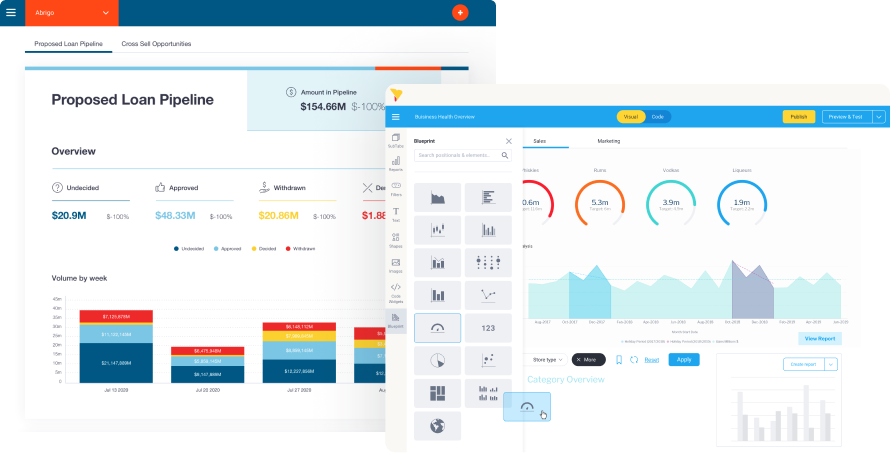
Small and medium-sized businesses (SMBs) are drowning in data but starving for insights. They have information scattered across spreadsheets, CRMs, and financial platforms, and they simply don't have the time or resources to stitch it all together.
This is where you come in. By using an embedded BI for SaaS solution, you can provide SMB users with a single source of truth, giving them a real-time overview of their business operations. Instead of manually pulling reports and analyzing data, they can see exactly what's happening at a glance.
This is a win for both of you. For your customers/end-users, it means they can:
- Make faster, smarter decisions by monitoring performance in real time
- Save time and money by eliminating manual reporting
- Gain a competitive edge without hiring a team of data analysts
For you, it means you've added immense value to your product, making it an indispensable tool for their daily operations. You're not just selling a feature, but selling a solution that helps them grow.
This makes analytics for SaaS a critical enabler for SMBs aiming to scale efficiently and stay competitive, and is a good reason why it's time to update your application with embedded analytics.
3. Optimize business processes
Your users are sitting on a goldmine of operational data, but they often can't see the forest for the trees. The day-to-day flood of information from ERPs, CRMs, and other business systems can make it nearly impossible to spot trends, inefficiencies, or opportunities.
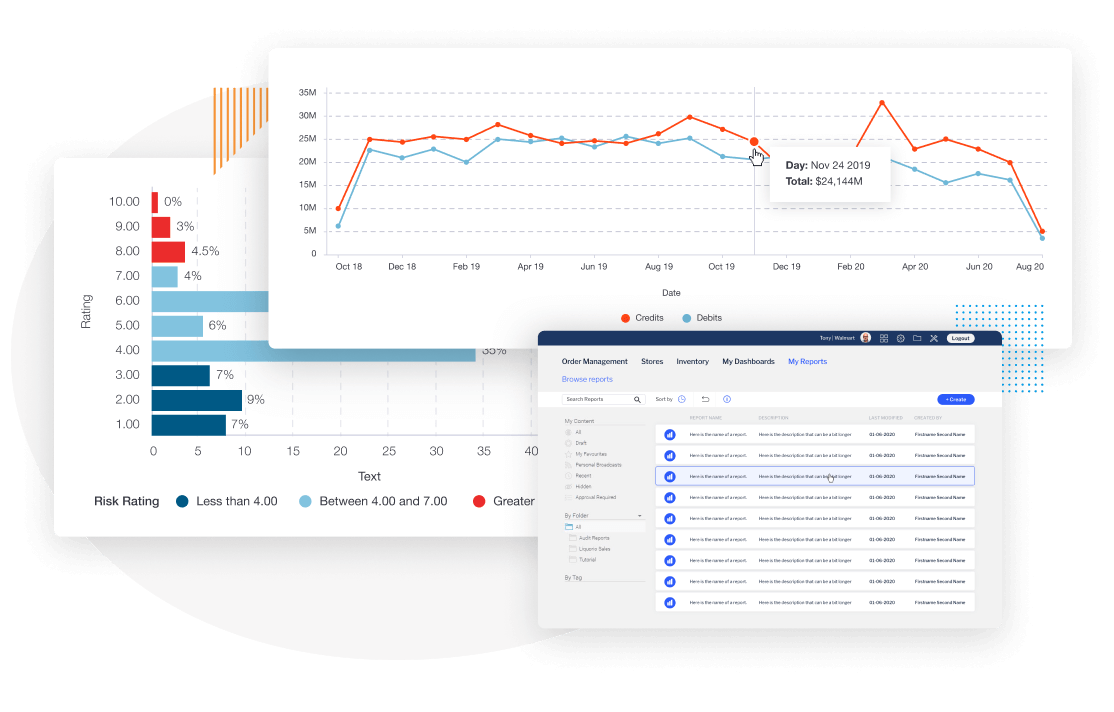
By using embedded BI for SaaS solutions with with automated alerting capabilities, such as Yellowfin Signals, you can turn that raw data into actionable insights, revealing dynamics within their operations that need attention. This allows your users to track key performance indicators (KPIs) and solve critical problems, all from within your app.
For instance, your product, with embedded BI, could automatically:
- Detect bottlenecks in their supply/operations chain
- Identify unbalanced IT network loads
- Flag inefficiencies in a manufacturing or system process
Automated analytics tools like Signals go beyond simple reporting. You are providing your users with a real-time view of their business health, whether it’s transactional, manufacturing, financial, HR, etc, data that allows them to move from reacting to problems to proactively optimizing their entire operation. This makes your product an essential part of their strategic planning, not just a tool for daily tasks.
Related: From Data to Decisions - How AI-Powered Analytics Speeds Up Business Impact
What are some other emerging use cases in embedded BI?
In 2025 and beyond, successful SaaS companies are looking beyond basic dashboards to deliver more advanced and innovative BI experiences.
Open-source frontend customization
In a mature SaaS market, your product's user experience (UX) is a key differentiator. Your customers expect a seamless, polished interface that feels like a single, cohesive application, rather than a collection of disconnected tools.
This is where open-source frontend customization comes in. Instead of being locked into a generic dashboard, embedded BI for SaaS analytics can help your team create an experience that perfectly matches your product's unique brand, UI, and UX guidelines. This level of control allows analytics to feel like a true extension of your product and a familiar interface for your existing user base, and not just a clunky add-on.
The best embedded BI solutions provide full white-label analytics capabilities - that is, complete authority to manage presentation layer design elements, including fonts, colors, interactions, and layouts, so analytics appear as product extensions.
Yellowfin, for instance, enables developers to embed and style BI elements with modern front-end frameworks through flexible integration options, which grant full control over delivering analytics without sacrificing design consistency or user experience.
Semantic data modeling
One of the main challenges with self-service analytics is inconsistent or unclear data. Semantic data modeling solves this by creating a user-friendly layer between raw data sources and the end-user. This layer provides consistent business terms and definitions, making the data more trustworthy for non-technical users.
For embedded BI for SaaS platforms, a semantic layer ensures all users, regardless of department or client organization, apply the same logic to data. This consistency builds trust and improves data integrity.
Solutions like Yellowfin streamline this process, allowing teams to store their data logic in one place while still enabling users to explore and analyze data independently.
AI-powered analytics
AI is being integrated directly into embedded BI features to make analytics smarter and more proactive. Instead of just a dashboard, BI solutions that provide AI analytics (also called augmented analytics) such as Yellowfin provide sophisticated technologies such as AI-powered natural language query (NLQ) and AI assisted insights that present insights in plain, simple language and automatically flag trends and anomalies. This provides immense value without your end-users requiring data expertise to get started.
Data monetization
SaaS companies are now treating their data as a new revenue stream, so it is no surprised value is a big part of deciding to buy an embedded analytics solution.
Data monetization involves selling specialized analytics to customers. This transforms your product's data into a valuable asset, creating new income and strengthening customer relationships.
Using embedded BI platforms like Yellowfin, you can offer features like data storytelling or enhanced dashboards as a premium add-on. This strategy requires multi-tenant data isolation and customizable user permissions to ensure data security and control.
Challenges of building your own analytics solution
Building an in-house embedded BI tool may seem appealing at this point, but it's often more challenging and costly than expected, requiring significant investment in staff and infrastructure. Some of the common challenges include:
- Scalability limitations: Your homegrown solution can struggle to keep up as your user base and data grow.
- Lack of analytics expertise: Most companies don't have deep, specialized knowledge in analytics, security, and data governance.
- Security and compliance concerns: You become fully responsible for managing data security and complying with regulations, such as GDPR and HIPAA.
- Time-consuming updates: Maintaining and updating the tool will pull your development team away from your core product.
This is why many companies opt for a specialized embedded BI solution like Yellowfin. It lets you integrate a complete analytics environment without the heavy lifting of building it yourself.
Related reading: Is Building Your Own Analytics Worth It?
Why embedded analytics can transform your SaaS business
Embedded BI is a powerful way to improve user experience and drive growth. By integrating a solution like Yellowfin, you unlock several key benefits of embedded analytics:
- Faster time-to-insight: Users get immediate answers with pre-built dashboards and natural language queries, without needing IT support.
- Increased product value: Adding powerful analytics makes your app stickier and more valuable.
- Revenue generation: Offer advanced analytics as a premium upsell of your SaaS platform, creating new revenue streams.
- Brand differentiation: Yellowfin's customizable UI, along with its data storytelling features, enables you to provide a visually distinctive analytics experience to win against market competition.
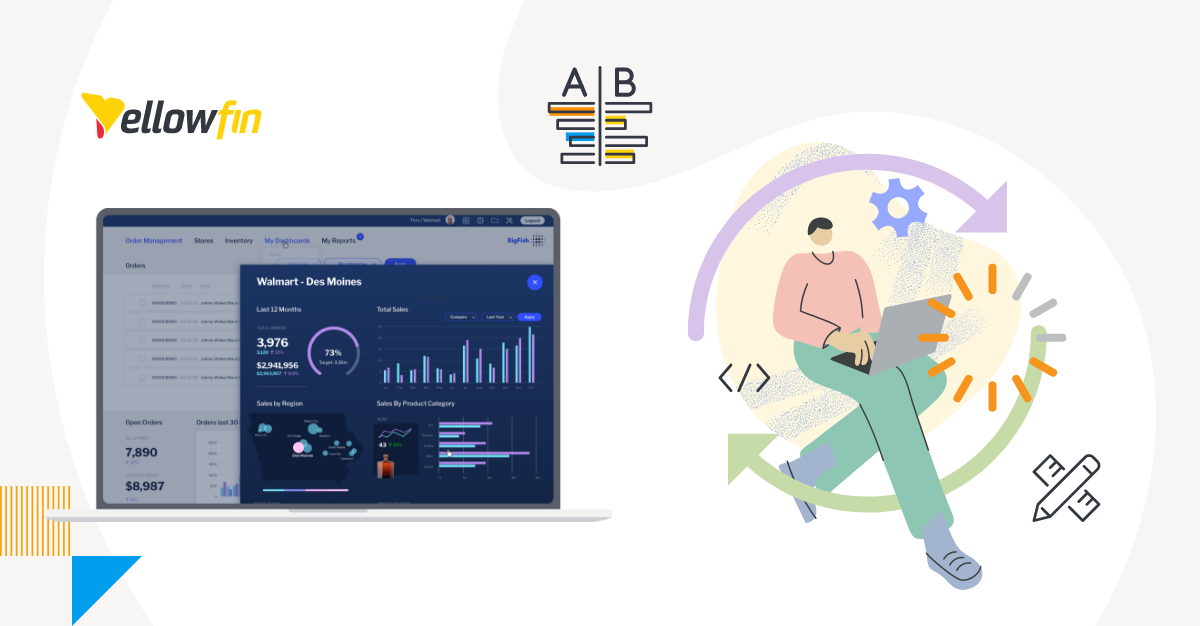
Ultimately, embedded BI solutions like Yellowfin lets your team focus on further innovating your SaaS product while it handles the analytics infrastructure.
Final thoughts
Embedded analytics is no longer optional; it’s expected.
By integrating insights directly into the product interface, businesses boost engagement, build trust, and unlock growth. A strategic investment in embedded BI delivers two key benefits: enhanced product value and new monetization opportunities.
With Yellowfin, organizations gain an enterprise-grade solution for business intelligence applications that scales seamlessly and helps overcome common internal challenges.
Frequently asked questions (FAQs)
1. What is the embedded function of Power BI?
Power BI Embedded lets users embed reports and dashboards into apps or websites for in-app analytics.
2 Why SaaS providers need analytics
SaaS providers need analytics to help customers track performance, uncover insights, and make better decisions. It also creates added value, making their product more competitive in the market.
3. How embedded BI enhances product-led growth
Embedded BI turns a SaaS product into a self-service analytics tool, increasing user adoption and engagement. This drives growth by making data insights an integral part of the product experience.
4. How embedded BI drives customer retention
By giving users real-time, actionable insights within the application, Embedded BI boosts satisfaction and efficiency. When customers find continuous value, they are more likely to stay loyal and renew.
Get started with best-in-class embedded BI
Extend your analytics with Yellowfin BI's embedded analytics platform and get a unique set of reporting and analytic capabilities to provide unique customer experiences.